Sussex has one of the highest deer densities in England. Fallow, roe, muntjac and sika deer are present across the county — from the wooded gills of the High Weald to the chalk downland of the South Downs, from farm woodland edges to arable fields grazed at night.
Without natural predators, deer populations are regulated only by the food and habitat available to them. Where that combination is good — and in much of Sussex it is — numbers rise. The land absorbs the pressure to a point, and then the signs start to appear: a browse line where there used to be a healthy understorey, saplings that never establish, crop margins taking repeated winter damage.
UK Deer Management works with landowners, farmers and estate managers across Sussex to assess deer activity, understand its impacts and put practical management in place.
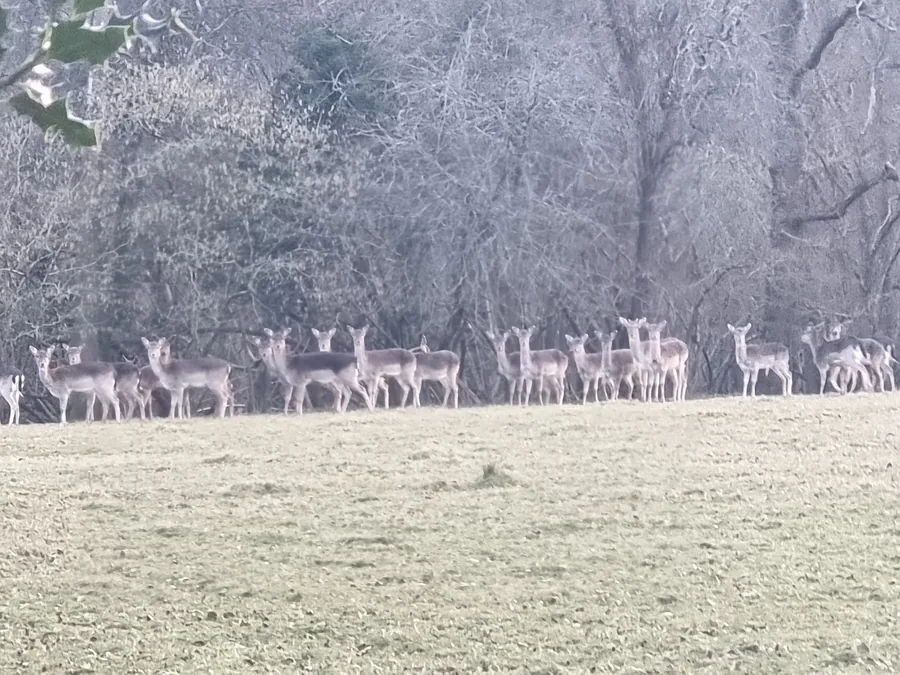
Why Deer Management Matters in Sussex
Sussex presents a set of conditions that suit deer exceptionally well. Extensive woodland cover, productive agricultural land, mild winters and a fragmented ownership landscape that makes coordinated management challenging — all of these factors contribute to deer populations that have grown beyond what the land can support in many areas.
The consequences show up differently depending on where you are and what the land is used for. In ancient woodland, the problem is the gradual disappearance of the understorey and the failure of natural regeneration. In a newly planted woodland creation scheme, it is saplings being stripped before they can establish. On farmland, it is crop margins taking repeated winter damage or a newly planted hedgerow eaten back to sticks.
The Sussex landscape also has distinctive regional characteristics that shape how deer management works. The High Weald is heavily wooded with a fragmented patchwork of land ownership that suits fallow deer — which range widely and do not respect property boundaries — particularly well. Ashdown Forest sits within a nationally recognised high-risk area for deer vehicle collisions, where discretion and professional practice are essential. The South Downs National Park contains sensitive ancient woodland and nationally important habitats where prolonged deer pressure causes lasting ecological damage.
The Main Deer Species Found In Sussex
Four deer species are present in Sussex. Each creates a different kind of pressure and requires a somewhat different management approach. For a broader overview of all species present in the region, see the deer species guide.
Fallow Deer
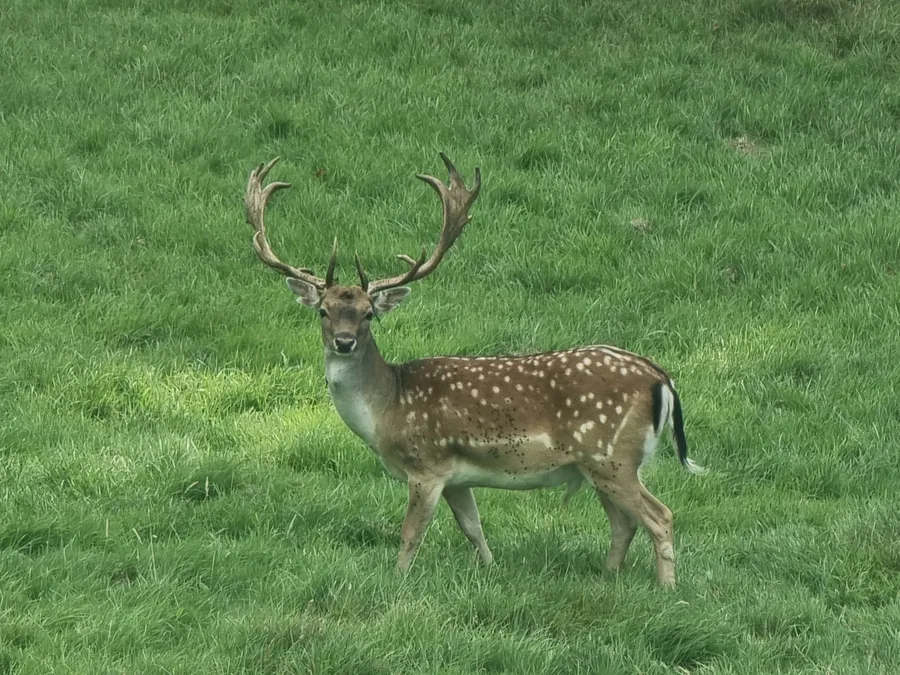
Fallow deer are the dominant species across much of Sussex and the primary cause of herd-level landscape damage. Non-native but long-established, they move in large groups and range freely across wide areas. A mature buck can weigh up to 85 kilograms.
Their impact is characterised by scale. Large herds clearing a woodland understorey, a browse line stripped back through an entire wood, crop margins grazed repeatedly through the winter — fallow deer make their presence obvious when numbers are high. In parts of the High Weald, deer density surveys have recorded populations at levels many times higher than the threshold for sustainable woodland management.
See the guide to fallow deer in Sussex for more on their behaviour, identification and typical impacts.
Roe Deer
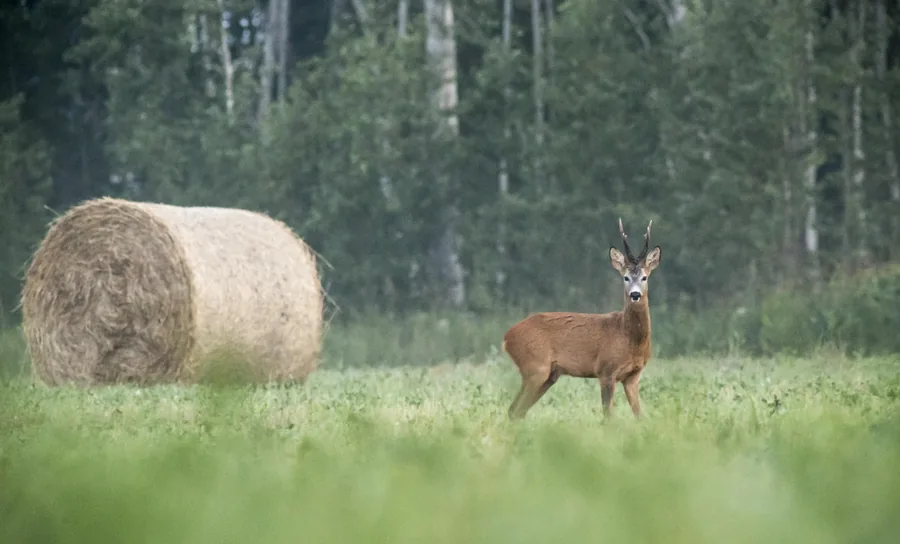
Roe deer are native to the British Isles and genuinely belong in the Sussex landscape. They are solitary by nature, small relative to fallow and far more discreet. Their damage is selective rather than wholesale — they target the leading shoots of young trees with precision, browsing the most nutritious growth available.
For a newly planted sapling, repeated roe browsing means a plant that never develops a clear main stem, branches laterally and fails to establish height. Across an entire planting scheme, the cumulative effect is substantial. Roe are present throughout Sussex and often responsible for unexplained losses in new planting schemes, even where landowners rarely see deer directly. The roe deer in Sussex guide covers their behaviour and field signs in more detail.
Muntjac Deer
Reeves' muntjac are a non-native species that have spread steadily across the South of England. In Sussex they are now well established, particularly in areas of dense cover. Their significance lies in what they eat: operating low to the ground, they feed on the bluebells, orchids, bramble and low vegetation that form the ecological fabric of ancient woodland floors. The damage they cause is cumulative rather than dramatic — a gradual impoverishment of ground flora and nesting habitat that builds quietly over years.
Unlike fallow or roe, muntjac have no defined breeding season. They breed throughout the year, which means populations can recover quickly if management pressure is not sustained.
Sika Deer
Sika deer are present in Sussex but remain localised in their distribution. In areas where they do occur, they cause distinctive damage — particularly bark stripping, which can kill or significantly weaken mature trees. Where sika are suspected or confirmed, management needs to account for their specific habits and seasonal behaviour.
How To Tell If Deer Are Causing Problems On Your Land
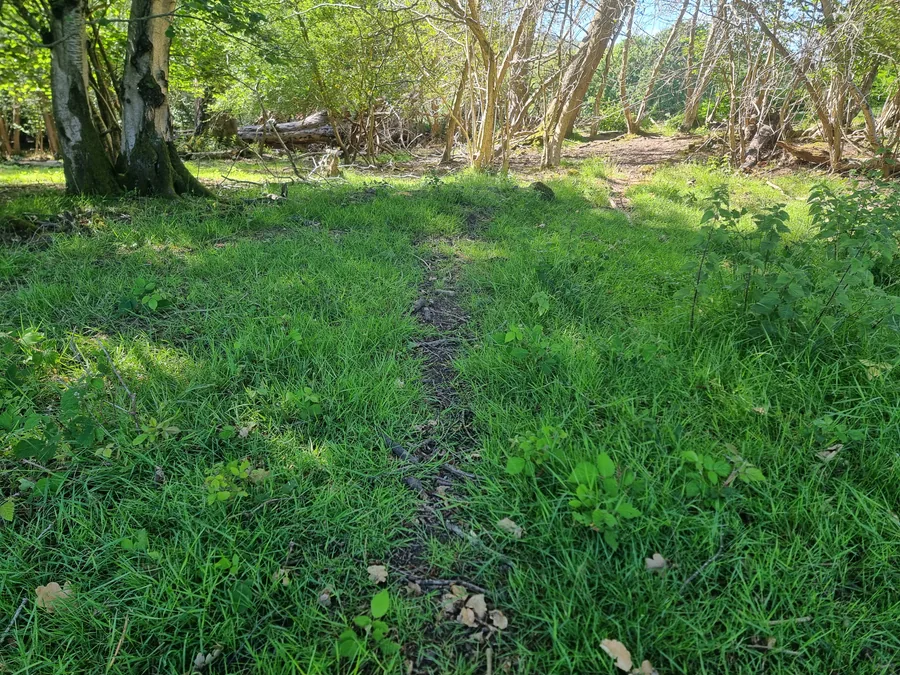
Most deer activity happens during the hours around dawn and dusk, and deer in occupied landscapes quickly learn to avoid open ground during daylight. As a result, significant deer pressure on a property is often invisible to casual observation.
Field signs are usually more reliable than direct observation as an initial indicator. The most common ones include:
- A browse line in woodland: all vegetation removed to a consistent height — typically around 0.7 to 0.8 metres for roe and muntjac, up to around 1.8 metres for fallow — leaving an open view beneath the canopy
- Fraying: bark damage and splitting on young tree stems, caused by bucks rubbing velvet from developing antlers or marking territory
- Slots: cloven hoof prints in soft ground, visible along rides, gateways, woodland edges and damp field margins
- Well-used crossing points: gaps in hedges or fences with worn ground on both sides and hair caught on wire
- Deer runs: narrow paths worn through long grass or scrub vegetation, running parallel to woodland edges or between cover and feeding areas
- Grazed or flattened crop edges: particularly near woodland cover and along established entry points
Where several of these signs coincide in the same area, the picture becomes clear quickly. The guides to deer tracks, slots and droppings and how to identify deer activity on your land cover these signs in more detail.
Woodland Damage Caused By Deer
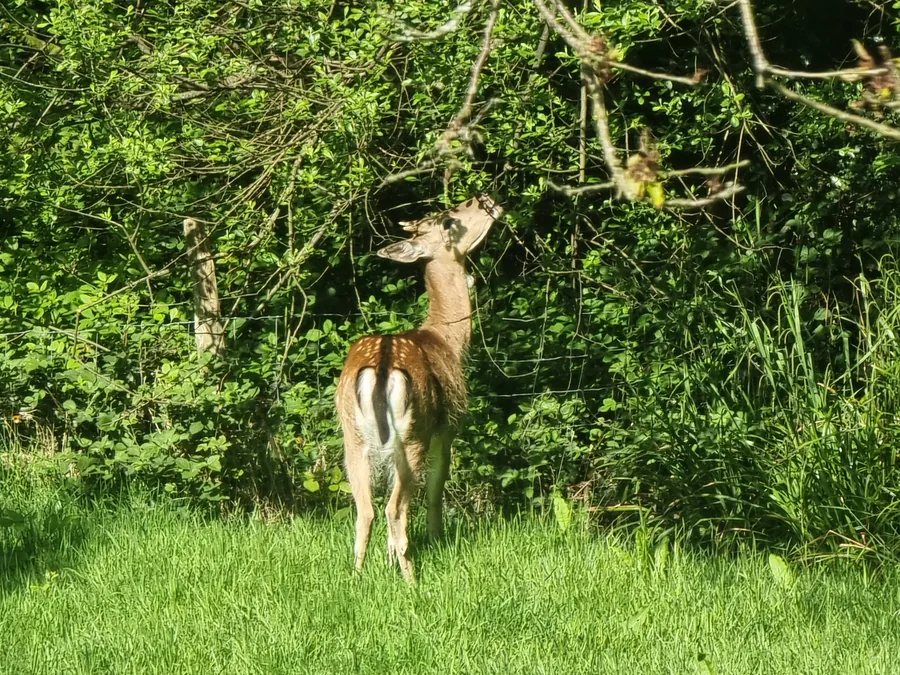
Deer damage in woodland accumulates slowly until it becomes undeniable. The most visible sign is the browse line — a horizontal threshold below which all vegetation has been removed, leaving an open understory beneath the canopy that looks tidy but represents significant ecological loss.
Below that line there is no shrub layer, no young growth, no bramble for nesting birds, no hazel or hawthorn regenerating from seed. The woodland has been arrested at a point where it can no longer rebuild itself. Natural regeneration — the process by which woodland self-seeds and replaces ageing trees — fails almost entirely where deer pressure is high. Seeds germinate, seedlings emerge and are browsed before they can develop. Without regeneration, there are no young trees to replace the ageing canopy.
Bark damage and fraying from bucks compound this. Young trees with repeatedly damaged stems develop weaker structures, are more susceptible to disease and grow less vigorously. Where these problems combine, the long-term consequences for biodiversity, woodland structure and carbon storage are considerable.
The detailed guide to deer damage in woodland covers these signs and their longer-term implications.
Agricultural Damage Caused By Deer
Beyond the woodland edge, deer cause direct financial damage across Sussex farmland.
Fallow deer are the principal cause of arable crop losses in the county. Large herds moving from cover onto winter wheat and oilseed rape at night cause damage through consumption, trampling and the physical disturbance of a large group of animals working the same ground repeatedly. Field margins closest to woodland take the heaviest pressure, though established herds regularly move well beyond the field edge.
Roe deer cause more dispersed agricultural losses. Newly planted hedgerows, shelterbelts and native tree species included in environmental stewardship schemes are particularly vulnerable — roe will systematically browse a newly planted hedge if nothing prevents them. Physical damage to fencing along established deer crossing routes is a persistent secondary cost that tends to be underestimated until it is properly audited. The guide to deer damage to crops and agricultural land covers the full range of agricultural impacts.
Deer And Woodland Regeneration
Natural regeneration is one of the most important indicators of ecological health in a woodland, and one of the first things to fail when deer pressure is too high.
The mechanism is straightforward. Seeds fall, seedlings emerge, and in a healthy system a proportion establish and eventually form the next generation of canopy trees. Where deer are present in significant numbers, seedlings are browsed before they can develop above browse height. The process fails not dramatically but quietly, year after year, until the woodland simply has no young trees at any stage of development.
In older woodlands across Sussex, this failure is already visible: mature canopy trees, an open understory and nothing in between. No young oaks or ash or hazel establishing from seed. The woodland looks sound from outside but is not replacing itself.
When deer pressure is brought under sustained control, recovery begins. It takes time — bramble and ground flora return first, followed by shrub growth, then seedlings establishing and pushing above browse height. The guide to woodland regeneration and deer browsing explains what the recovery process looks like in practice.
How Deer Management Works
Effective deer management begins with understanding the land, not with culling.
An initial assessment considers which species are present, the scale of activity, how deer are using the property, what the land management objectives are and what is happening on neighbouring land. Deer move freely across boundaries, so the wider context matters as much as what is visible on a single holding.
From that baseline, management is planned to be proportionate to the impact and the objectives. On some sites the focus is on reducing pressure in a specific area — a newly planted woodland, a vulnerable crop field, a conservation zone within a larger holding. On others it is a broader programme addressing the herd dynamic across the whole property over time.
Safety is central to all operations. Management is carried out in accordance with UK legislation and recognised best practice, and work is only undertaken where it can be done responsibly. Ongoing monitoring ensures that management stays aligned with what is actually happening on the ground, not just what was observed at the outset.
See the deer management services page for a full overview of what UK Deer Management provides, and why manage deer for the broader ecological and practical context.
Is Deer Management Free?
In many situations, professional deer management can be provided without direct cost to the landowner.
Where it is appropriate and safe to do so, UK Deer Management retains ownership of deer harvested during management activities. The venison then enters the food chain through approved routes, providing an offset against the operational cost of professional management. This arrangement works well on many sites and allows landowners to address deer pressure without incurring direct fees.
Every site is assessed individually. Suitability depends on location, access, the species and numbers present, and the nature of the work required. Not every site lends itself to this arrangement, and we will always be straightforward about what is realistic for your circumstances. If you have a question about cost, the most useful thing is to get in touch and discuss your specific situation directly.
What Happens To The Deer?
Deer management is not about removing deer from the countryside. The aim is a population in balance with what the land can support — healthy animals at a density that allows woodland, ground flora and agricultural land to function properly.
Where management activity takes place, it is carried out humanely, lawfully and professionally, in accordance with UK legislation and recognised best practice. Deer are not treated as a pest to be eliminated but as part of the landscape that requires responsible stewardship.
Deer that are suitable for the food chain are processed as venison and enter the local food supply through approved routes. Wild venison is a natural, lean and sustainable meat, and we believe harvested animals should be used responsibly rather than wasted. Where an individual animal is not suitable — due to injury, disease or other circumstances — disposal is handled responsibly and in accordance with the relevant regulations.
Areas We Cover Across Sussex
UK Deer Management provides services across Sussex and the wider South East, including:
- East Sussex and West Sussex
- The High Weald, including the wooded landscape around Ashdown Forest and the central Weald
- The South Downs National Park and surrounding farmland
- Agricultural land across the county — arable, mixed and livestock farms
- Private estates, conservation sites, woodland holdings and smaller rural properties
If you are unsure whether your land falls within our working area, get in touch and we will advise.
Need Advice About Deer Management In Sussex?
If deer are affecting woodland, crops, planting schemes or wider land management objectives on your land, UK Deer Management can help assess the situation and advise on practical next steps. Whether the problem is obvious or you are not yet certain what you are dealing with, the first step is a conversation.