They are also one of the species most likely to create significant land management pressure where local numbers are high. Large groups can browse woodland, graze field margins, damage crops and create repeated movement routes between cover and feeding areas.
For landowners, farmers and woodland managers, understanding fallow deer behaviour is an important part of assessing deer impact and deciding whether management may be required.
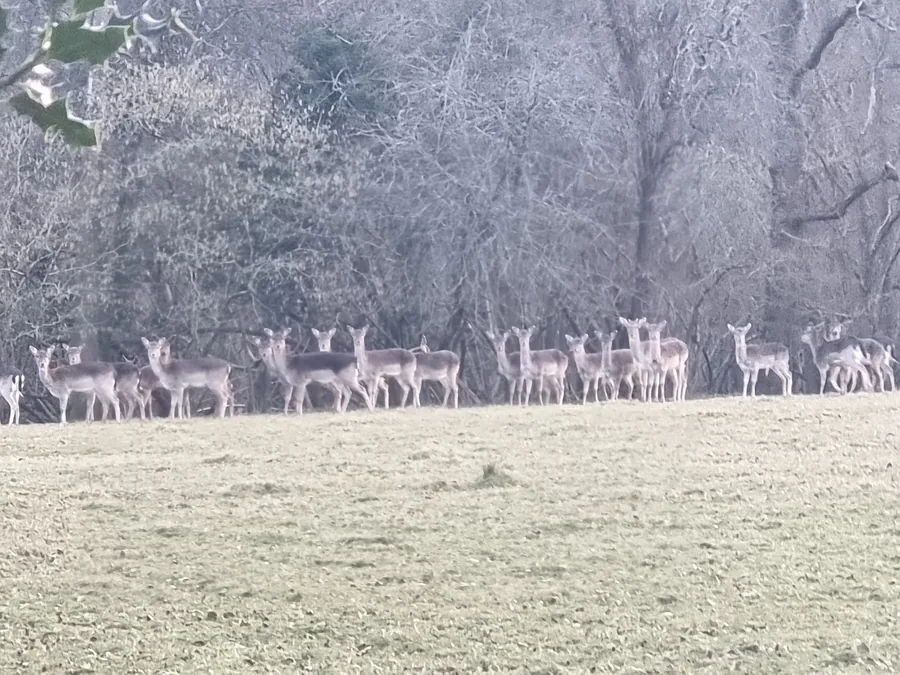
Recognising Fallow Deer
Fallow deer are one of the most distinctive deer species found in Sussex, although identifying them is not always as straightforward as many people expect.
Unlike roe deer, which have a relatively consistent appearance, fallow deer occur in several recognised colour forms. It is therefore possible to see two fallow deer standing together that appear quite different in colour while still belonging to the same species.
The most common colour variation is the familiar chestnut-brown summer coat with white spots. During winter, these animals typically become darker and the spots become less obvious.
Other recognised colour forms include:
- Common (tan or chestnut with white spots)
- Menil (lighter coat with prominent white markings)
- Melanistic (very dark brown or almost black)
- Leucistic (very pale cream or white)
The presence of different colour forms can sometimes lead landowners to assume multiple species are present when they are actually observing fallow deer displaying natural coat variation.
Regardless of colour, fallow deer typically share several identifying features:
- Long tail with a dark central stripe
- White rump markings
- Broad body shape
- Relatively long neck
- Group-living behaviour
- Distinctive bounding movement when alarmed

Fallow Deer Antlers
The antlers of mature fallow bucks are one of the easiest ways to distinguish the species from other deer found in Sussex.
Young bucks initially develop simple spike antlers. As they mature, the antlers become progressively broader and more complex.
Fully mature bucks develop palmated antlers. These are broad, flattened antlers that resemble an open hand or shovel and are unique among the commonly encountered deer species in Sussex.
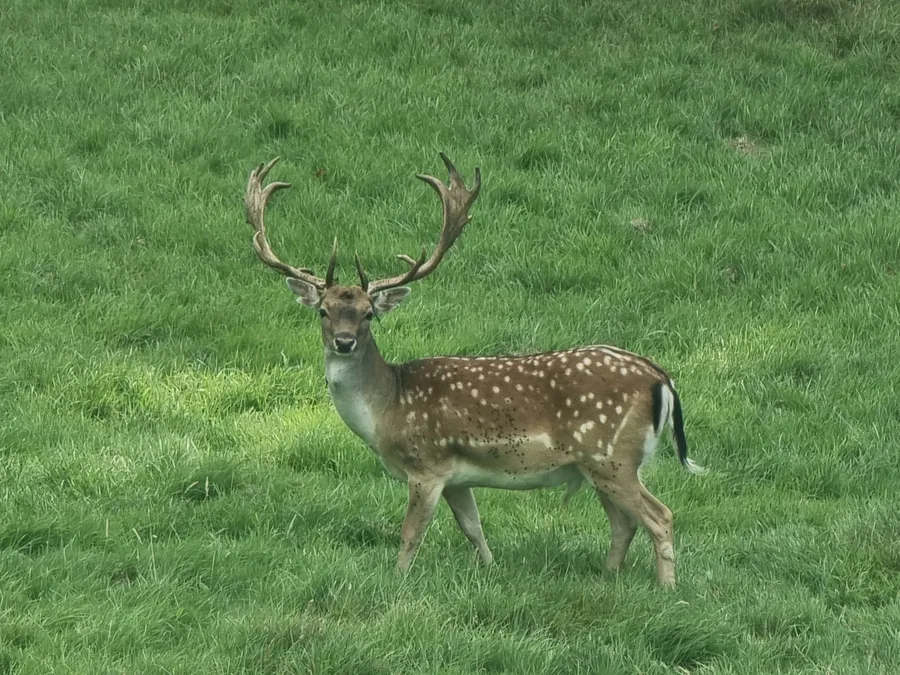
Key antler characteristics include:
- Broad palmated structure
- Multiple points around the palm
- Significant width in mature animals
- Annual casting and regrowth cycle
This differs markedly from roe deer, which carry shorter upright antlers with a maximum of three points per side, and muntjac deer, which have much smaller antlers carried on prominent pedicles.
During the autumn rut, mature bucks can be particularly conspicuous as they establish territories and compete for access to does. At this time of year, large palmated antlers are often one of the most obvious field signs that fallow deer are present.
For many landowners, antlers provide the quickest and most reliable method of distinguishing mature fallow bucks from other deer species using the same landscape.
Where Fallow Deer Are Found
Fallow deer are well suited to the mixed landscapes found across Sussex.
They may use:
- Ancient woodland
- Parkland
- Farmland
- Large estates
- Woodland blocks
- Field margins
- Open grassland
- Hedgerow networks
They often move between woodland cover and open feeding areas, especially where quiet fields, pasture or crop margins are close to daytime shelter.
Herd Behaviour
Fallow deer often gather in groups, particularly outside the breeding season.
This behaviour is one reason their impact can be more obvious than that of solitary or small-group species. A single roe deer may create localised browsing pressure, but a group of fallow deer can affect a field edge, woodland ride or young planting area much more visibly.
Herd size varies by location, season, disturbance and food availability. In some areas, groups can become large enough to create repeated and noticeable damage.
For more on how to read deer activity on your land, see the full guide to identifying deer activity.
Fallow Deer Field Signs
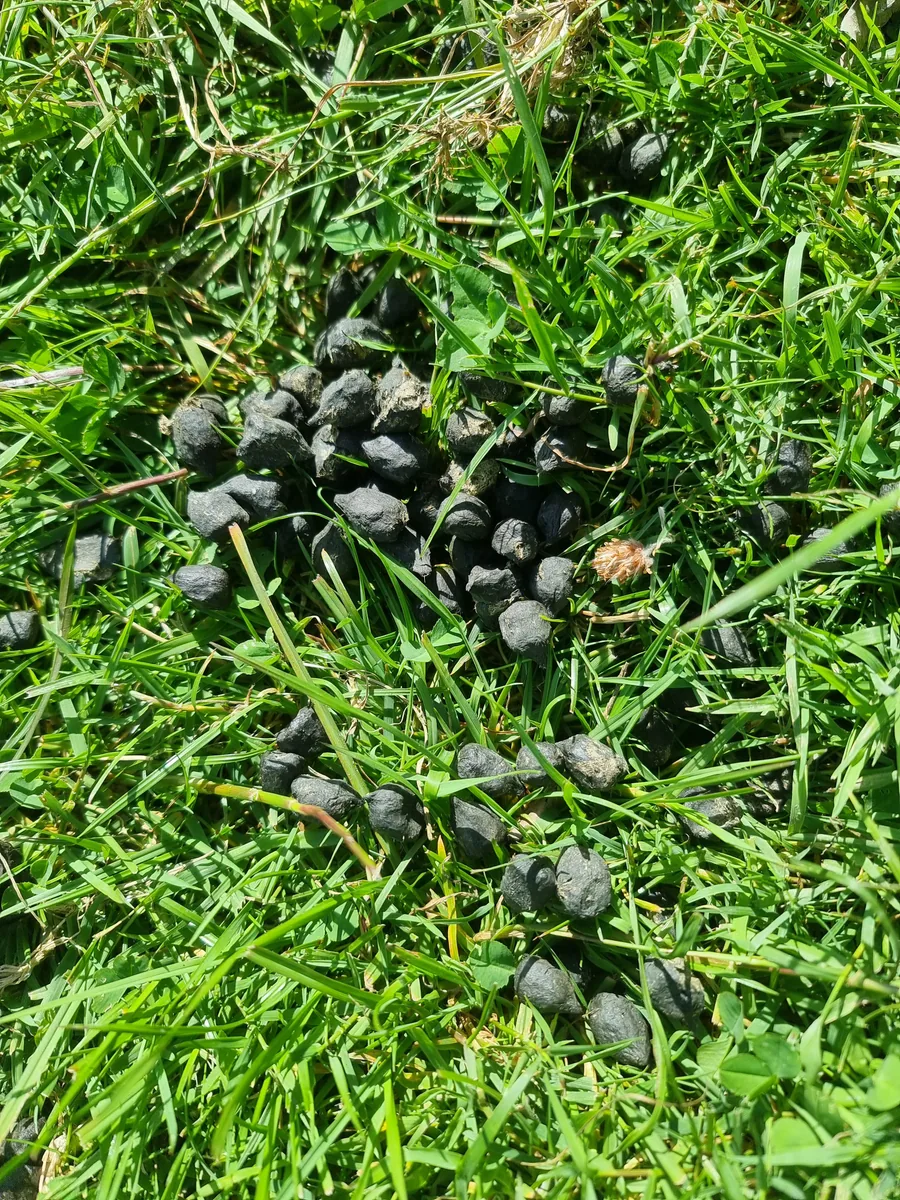
Fallow deer can leave strong field evidence because of their size and group behaviour.
Common signs include:
- Large slots in soft ground
- Multiple tracks along the same route
- Droppings in feeding areas
- Flattened grass or crop edges
- Well-used crossing points
- Bark damage or fraying
- Browsing at higher levels than roe deer
Where a group is using the same route repeatedly, the evidence can become very clear around gateways, woodland edges and hedge gaps. A detailed guide to tracks, slots and droppings covers what to look for across different species.
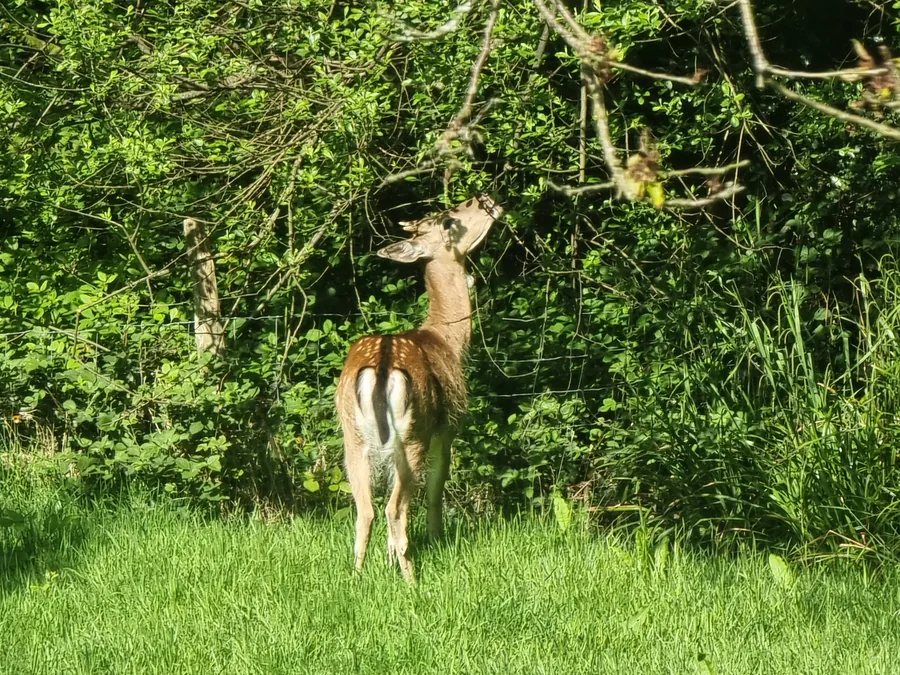
Woodland Browsing And Browse Lines
Fallow deer can place heavy browsing pressure on woodland.
Because they are larger than roe deer and often move in groups, they can create visible browse lines and suppress young growth across wider areas.
Woodland owners may notice:
- Missing saplings
- Browsed leading shoots
- Poor natural regeneration
- Open understorey
- Reduced shrub layer
- Heavy pressure along rides and edges
This can affect woodland structure over time, particularly where young trees fail to establish outside protected areas. The guide to woodland browsing explains how deer impact accumulates across different habitats.
Impact On Agricultural Land
Fallow deer can also affect agricultural land.
Damage may occur through grazing, browsing, trampling and repeated movement along field margins. Where groups feed together, the impact can be concentrated and visible.
Common agricultural signs include:
- Grazed crop edges
- Flattened areas
- Slots entering from woodland
- Droppings near margins
- Repeated pressure at hedge gaps
- Damage around quiet fields close to cover
The economic impact depends on crop type, season, deer numbers and how often the same areas are used. Further guidance on crop damage covers the range of impacts and what to look for.
Seasonal Behaviour
Fallow deer behaviour changes through the year.
During quieter periods, groups may feed and move predictably between cover and open ground. During the rut, mature bucks become more active and visible as they compete for access to does.
Seasonal food availability also affects movement. Deer may use different parts of a property depending on crop growth, woodland cover, weather and disturbance.
For landowners, this means damage may not appear evenly throughout the year. A site that seems quiet in one season may experience much heavier pressure in another.
Why Fallow Deer Can Be Difficult To Manage
Fallow deer can be challenging because they are mobile, social and often range across multiple landholdings.
A group may feed on one property, shelter on another and travel through several more. This makes it difficult to understand the full pattern of movement from one site alone.
Effective assessment often requires looking at:
- Feeding areas
- Bedding cover
- Movement routes
- Neighbouring land
- Seasonal pressure
- Herd size
- Damage patterns
Where fallow deer move across boundaries, management is often more effective when landowners understand the wider local context.
Management Considerations
Fallow deer management should be based on evidence rather than occasional sightings alone.
Useful questions include:
- Are young trees regenerating?
- Are crops being damaged?
- Are deer using the site regularly?
- Are groups present or only individual animals?
- Is the damage seasonal or continuous?
- Are neighbouring properties experiencing similar issues?
The aim is to understand whether fallow deer are simply present or whether their activity is affecting land management objectives. See the deer management services page for information on how UK Deer Management can help assess and address deer pressure on your land.
Need Advice About Fallow Deer?
If fallow deer are affecting woodland, crops, planting schemes or wider land management objectives, UK Deer Management can help assess the situation and advise on practical next steps.