Deer browsing is one of the factors that can prevent regeneration from succeeding. Where browsing pressure is sustained, seedlings may appear in autumn but are cut back before reaching the height of a year-old plant. Over several seasons this produces a woodland floor with evidence of germination — seedlings, stumps of browsed-back growth — but without establishment. The canopy trees remain standing while the next generation fails to develop beneath them.
For woodland owners, understanding the link between deer browsing and regeneration is central to responsible woodland management.
What Is Woodland Regeneration?
Woodland regeneration is the process by which new trees and shrubs establish within a woodland.
This may happen naturally from seed, through coppice regrowth or through planting and restocking.
A resilient woodland usually contains trees of different ages, along with shrubs, ground flora and habitat structure. Regeneration is what allows the woodland to renew itself over time.
How Deer Affect Regeneration
Deer browse young shoots, buds, leaves and saplings.
Where browsing pressure is light, woodland may continue to regenerate successfully. Where pressure is heavy, young trees are repeatedly eaten back before they can establish.
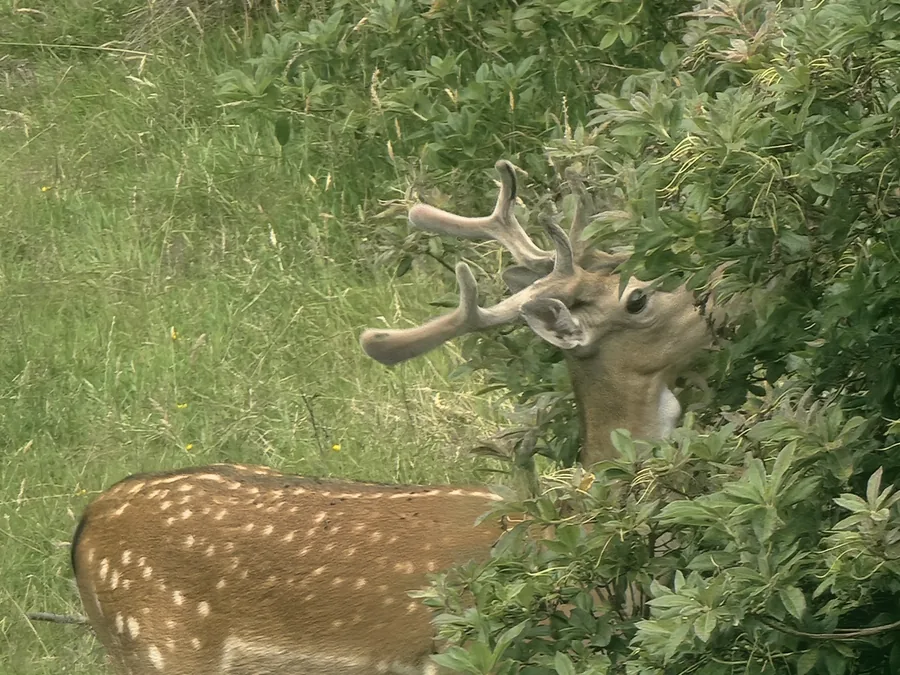
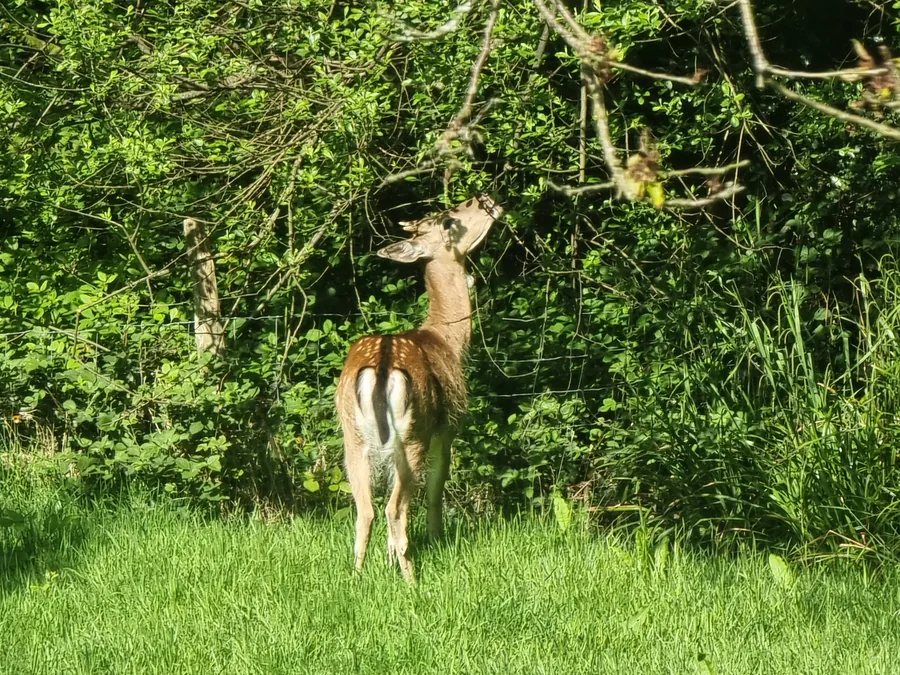
This creates a browse line — the horizontal band, visible on entering many deer-pressured woodlands, below which all accessible shoots and foliage have been removed. In woodland with significant roe deer pressure, the browse line typically sits below around 0.7 to 0.8 metres. Where fallow are present, it can extend to 1.8 metres or higher. Muntjac browse lower still, targeting understorey shrubs, bramble and ground flora throughout the year. The browse line is one of the most reliable field indicators of deer pressure and can help indicate which species are present and how long pressure has been sustained.
Signs That Deer Are Suppressing Regeneration
Signs may include:
- Few or no young trees
- Repeatedly browsed saplings
- Sparse shrub layer
- Failed coppice regrowth
- Poor survival of planted trees
- Young trees protected only inside guards or fenced areas
- Visible browsing at consistent heights
- Open woodland floor with limited structure
Muntjac browsing can be particularly damaging to understorey species such as hazel, bramble, dog rose and wild cherry at seedling and sapling stage, often suppressing the shrub layer that other woodland species depend on. Fallow deer in higher numbers can reduce regeneration across larger areas, including ground flora and the lower canopy. Roe deer tend to target specific favoured species — oak, ash, hazel and bramble are commonly affected — and their impact may be less immediately obvious than that of fallow but cumulatively significant where the population is sustained over several seasons.
These signs should be considered alongside other factors such as light levels, soil condition, competing vegetation and past management.
Natural Regeneration Versus Planting
Both natural regeneration and planting can be affected by deer.
Natural regeneration may fail where seedlings are repeatedly browsed. Planting may also fail if young trees are not adequately protected or if deer pressure is too high.
In some situations, tree guards or fencing may help protect planted trees in the short term. In others, where deer pressure across the whole site is high, protection alone is unlikely to resolve the underlying issue. The visible signs of browsing damage on both natural regeneration and planted stock are covered in the guide to deer damage to woodland.
Why Regeneration Matters
A woodland without regeneration may appear healthy in the short term because mature trees remain present.
However, if few young trees are establishing, the woodland may become less resilient over time.
This can affect:
- Future canopy replacement
- Biodiversity
- Woodland structure
- Habitat quality
- Timber or amenity value
- Climate resilience
- Long-term conservation outcomes
The Role of Deer Management
Deer management can help reduce browsing pressure so that young trees, shrubs and ground flora have a better chance of establishing.
Effective deer management for woodland regeneration is not about eliminating deer from the landscape — it is about reducing browsing pressure sufficiently and consistently enough for young trees, shrubs and ground flora to establish beyond the reach of deer.
This requires an understanding of deer species, local population pressure, site objectives and the condition of the woodland. Learn more about why deer management matters for woodland and habitat health.
When to Seek Advice
Woodland owners should seek advice where regeneration is failing and deer activity is present.
A site assessment can help determine whether deer are the primary cause or one of several contributing factors.
This can then inform a practical Deer Management Plan aligned with the woodland owner's objectives.
Need Advice On Woodland Regeneration?
If deer browsing is affecting regeneration, planting or woodland condition, UK Deer Management can help assess the site and recommend practical next steps.