Fortunately, deer leave a range of signs that can help determine whether they are using a site regularly. Tracks, droppings, browsing damage, fraying, browse lines and well-used movement routes can all provide valuable clues.
Looking at these signs collectively is often far more useful than relying on occasional sightings. A landowner who understands what to look for can build a much clearer picture of how deer are using a property and whether their activity is having a significant impact.
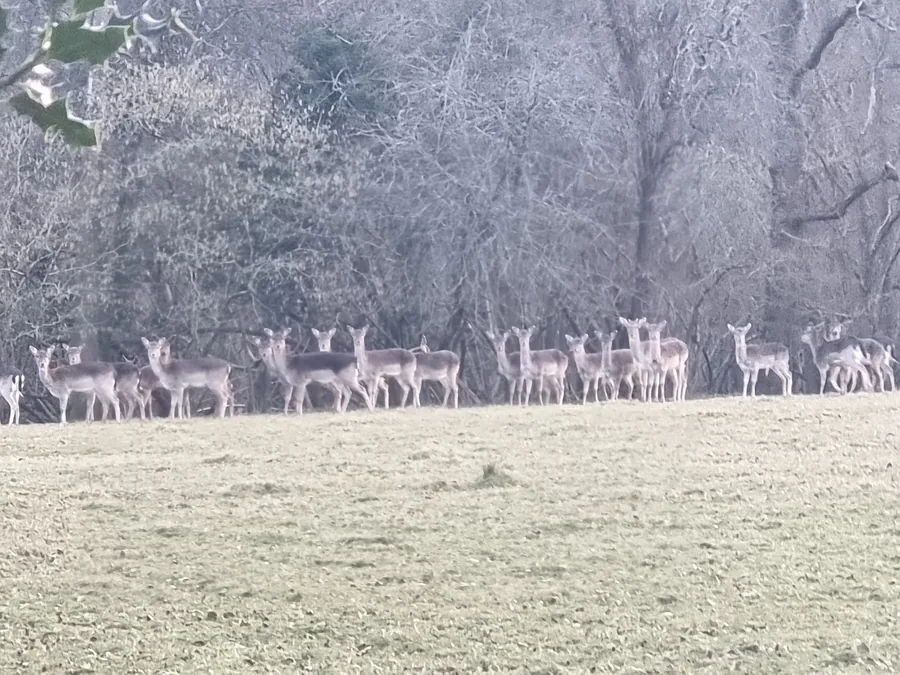
Why Deer Are Often Difficult To See
Even where deer are present in reasonable numbers, they may not be seen frequently.
Several factors contribute to this:
- Deer are often most active at dawn and dusk.
- Woodland and scrub provide effective cover.
- Deer may alter their behaviour in response to human activity.
- Individual animals can occupy large areas and move considerable distances.
As a result, the absence of sightings does not necessarily mean the absence of deer.
Many properties with substantial browsing pressure receive surprisingly few direct observations of deer.
Tracks And Slots
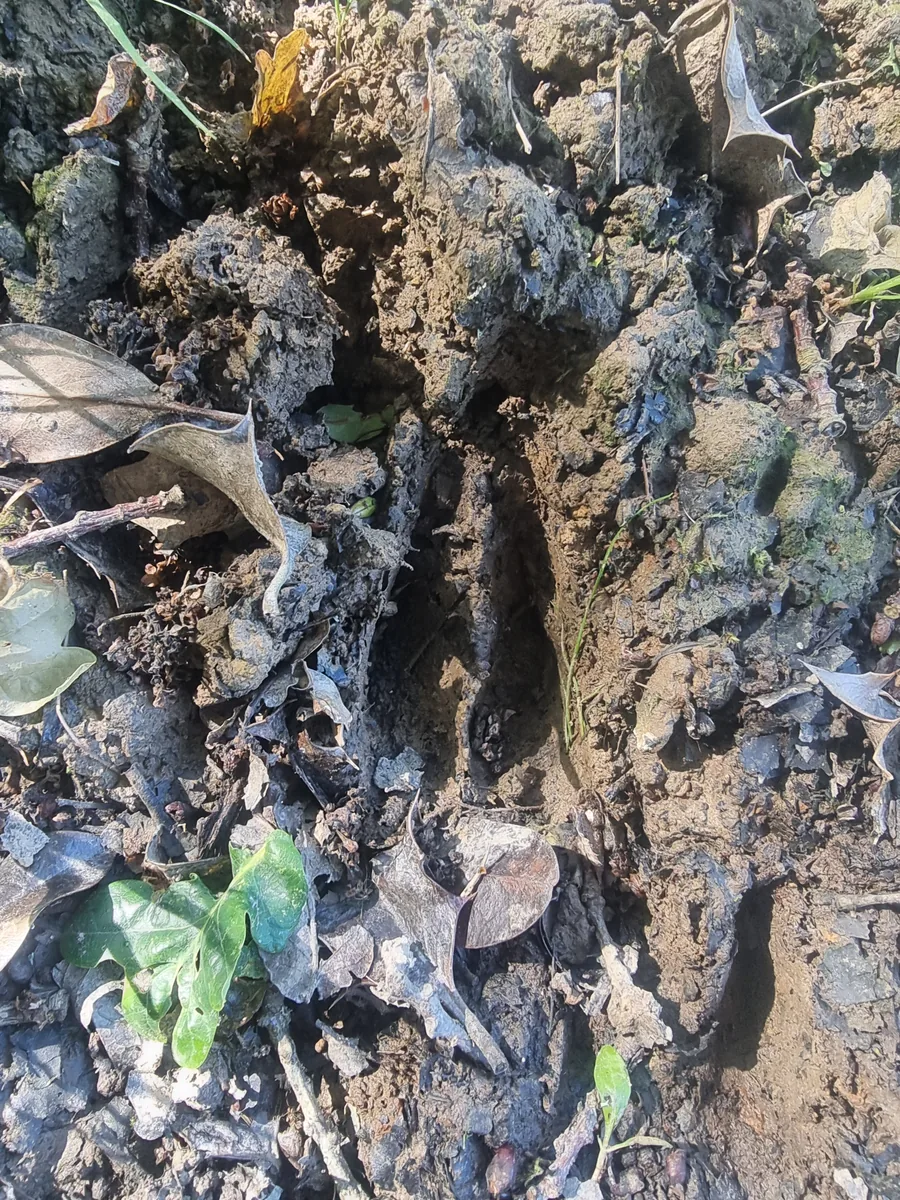
One of the clearest indicators of deer activity is the presence of tracks, commonly known as slots.
These are the impressions left by a deer's cloven hooves and are often easiest to find in:
- Muddy gateways
- Woodland rides
- Field margins
- Stream crossings
- Soft ground beneath trees
- Frequently used paths
Fresh slots typically have sharp edges and clear definition. Older tracks become less distinct as they weather.
Repeated tracks in the same location often indicate established movement routes. For a detailed guide to reading deer tracks, see Deer Tracks, Slots and Droppings Explained.
Deer Droppings
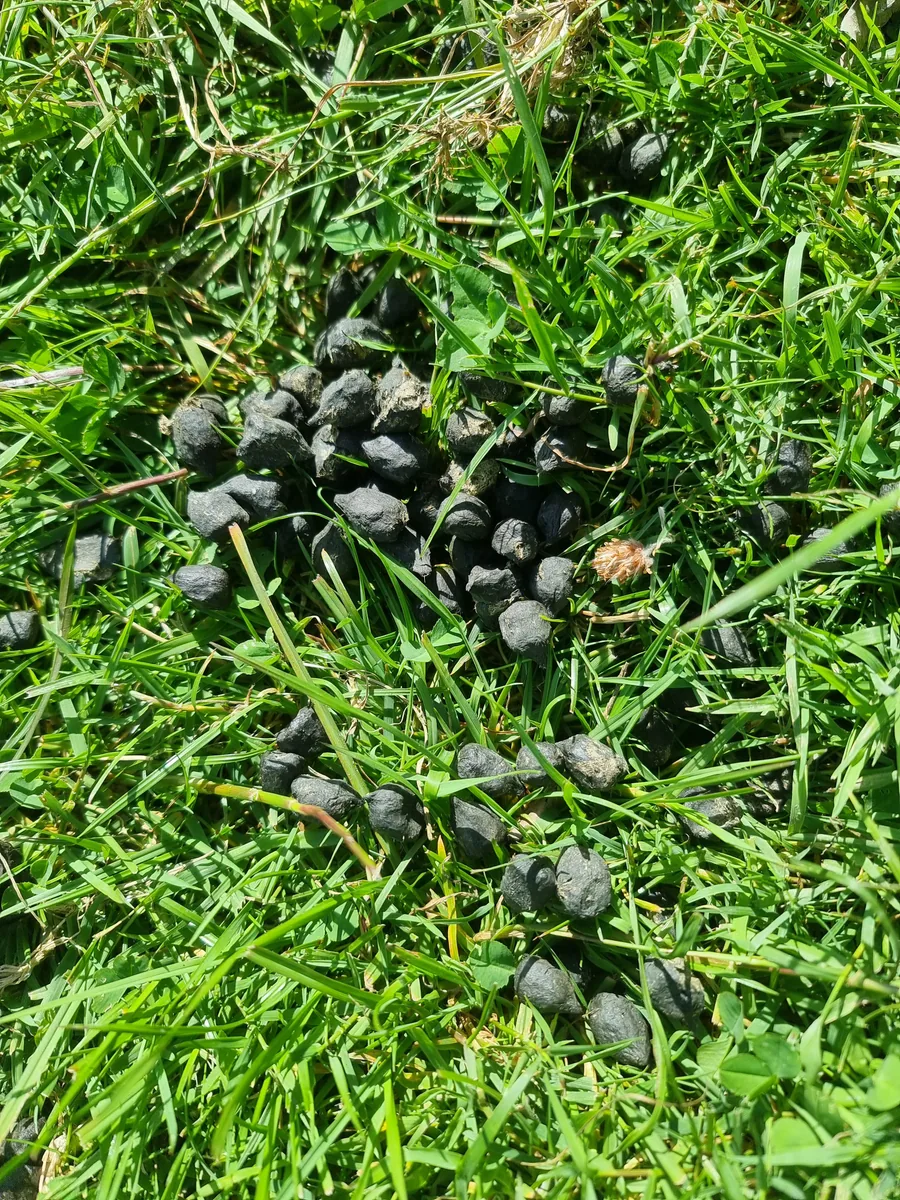
Droppings are another useful sign and are often easier to find than tracks during dry weather.
Deer droppings usually appear as small, dark pellets. Their appearance can vary depending on diet, season and freshness.
When assessing droppings, consider:
- How frequently they occur
- Whether they are fresh or old
- Whether they are concentrated in particular areas
- Whether they are associated with other signs
Finding a few pellets occasionally may simply indicate deer passing through. Regular concentrations can suggest more sustained use of an area.
Browsing Damage
Browsing occurs when deer feed on shoots, leaves, buds and young growth.
Unlike clean cuts made by machinery or pruning tools, deer browsing often leaves a torn or ragged appearance.
Common browsing signs include:
- Missing leading shoots
- Repeated damage to saplings
- Suppressed shrub growth
- Browsed bramble
- Damage to newly planted trees
- Uneven regeneration
In woodland settings, browsing pressure often becomes visible long before deer are regularly seen. See the guide to Deer Damage To Woodland for more detail on recognising and assessing browsing impacts.
Browse Lines
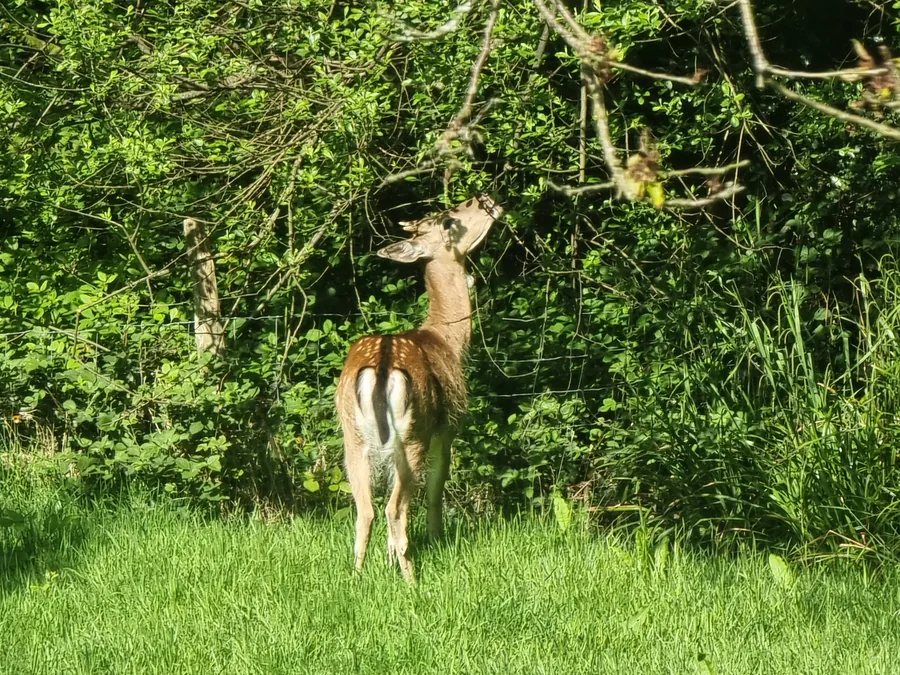
A browse line is a visible height below which vegetation has been repeatedly eaten.
This can create a striking contrast between heavily browsed lower vegetation and taller growth above deer reach.
Browse lines are particularly useful because they indicate long-term pressure rather than isolated feeding events.
Roe deer often browse lower vegetation and young saplings, while larger fallow deer can create more obvious browsing effects across wider areas.
The presence of a browse line is often a sign that deer are influencing the structure of the woodland.
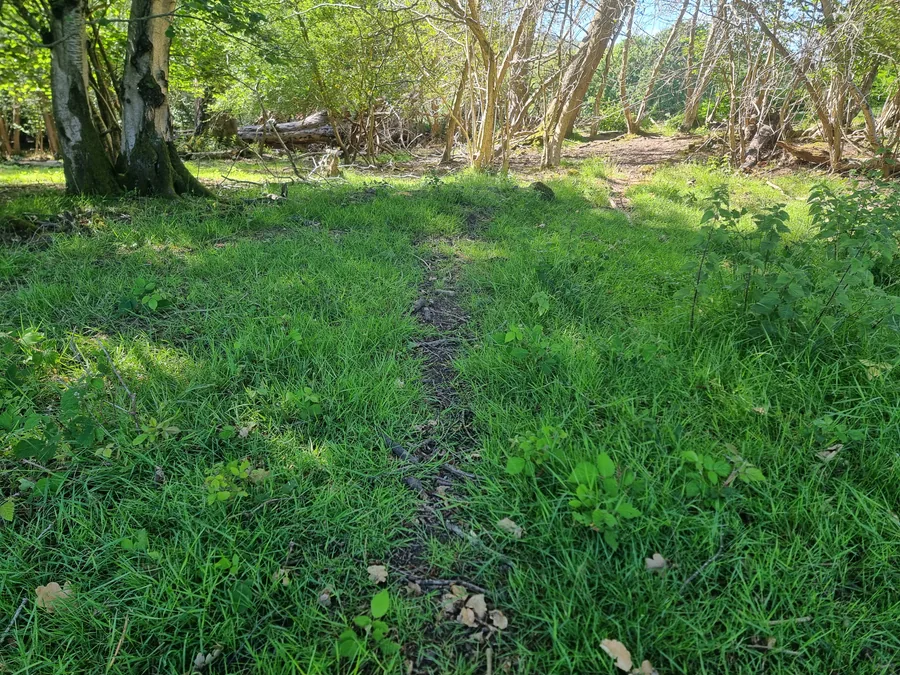
Deer Runs And Crossing Points
Deer rarely move randomly across a landscape.
Instead, they tend to use established routes repeatedly.
These routes can become visible as:
- Narrow paths through vegetation
- Gaps in hedgerows
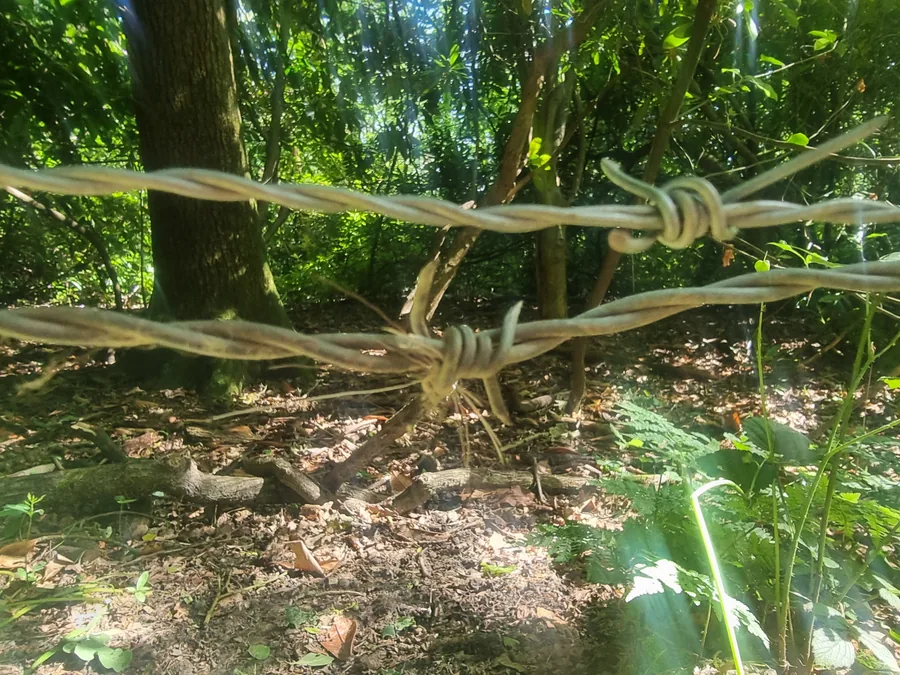
- Regular fence crossings
- Flattened grass
- Consistent track lines
Repeated use of these routes can help identify where deer are entering and leaving a property.
Understanding movement patterns can be just as important as understanding deer numbers.
Fraying Damage
Fraying occurs when male deer rub their antlers against trees and shrubs.
This behaviour is most common during periods associated with territorial activity and antler maintenance.
Signs of fraying include:
- Stripped bark
- Damaged stems
- Broken saplings
- Scarring on young trees
Fraying should not be confused with browsing.
Browsing affects shoots and foliage. Fraying affects bark and stems.
Signs Of Excessive Deer Pressure
Not every sign of deer activity represents a problem.
Many properties support deer without experiencing significant impacts.
However, concern may be justified where there is evidence of:
- Repeated browsing damage
- Failed natural regeneration
- Damage to young planting
- Loss of woodland understorey
- Regular crop damage
- Persistent pressure across multiple seasons
When several of these signs occur together, deer may be affecting wider land management objectives. The guide to Signs You Have Too Many Deer On Your Land covers these indicators in detail.
Which Species Might Be Responsible?
Several deer species occur across Sussex and the wider South East.
The most commonly encountered include:
- Roe deer
- Fallow deer
- Muntjac deer
- Sika deer
Each species behaves differently and may leave slightly different patterns of activity and impact.
Understanding which species are present can help inform management decisions. See the Deer Species guide for information on each species found in Sussex.
When To Seek Advice
Professional advice may be beneficial where deer activity is affecting:
- Woodland regeneration
- Newly planted trees
- Agricultural crops
- Conservation projects
- Estate management objectives
- Biodiversity outcomes
A site assessment can help determine how deer are using a property, identify likely species and assess whether management measures may be appropriate.
Need Help Assessing Deer Activity?
If you are seeing tracks, droppings, browsing damage or other signs of deer activity, UK Deer Management can help assess the site and provide practical advice.
Whether the issue relates to woodland, agriculture or wider land management objectives, understanding the evidence on the ground is the first step towards making informed decisions.