Key Takeaways
- A Deer Impact Assessment looks at what deer are doing to a site, not simply how many are present.
- Impact evidence is often more useful than population estimates when making deer management decisions.
- Assessments can cover woodland, farmland, conservation sites and mixed rural properties.
- The findings help landowners decide on proportionate, evidence-led next steps.
- An assessment is often the practical starting point before developing a Deer Management Plan.
Where this fits
A deer impact assessment usually sits between recognising signs of deer pressure and deciding on a practical management approach.
What Is a Deer Impact Assessment?
A Deer Impact Assessment is a structured examination of how deer are affecting a specific site. Rather than focusing on counting deer, it looks at what those deer are doing: the damage they are causing, the habitat condition they are creating and whether the level of deer activity is compatible with what the landowner is trying to achieve.
The assessment typically examines a range of evidence gathered during a site visit. This may include the condition of woodland regeneration, the presence and extent of browsing damage, signs of bark stripping, crop losses on agricultural land, deer movement indicators such as runs and slots, and the overall state of ground flora and understorey vegetation.
The result is a body of evidence that gives the landowner a clear picture of what deer are doing on their land, where pressure is concentrated and whether it is preventing land management objectives from being achieved. This matters because effective deer management should be based on what is actually happening on the ground rather than on assumptions about how many deer are present.
Deer Impact Assessments are relevant for woodland owners, farmers, estates, conservation land managers and anyone with a concern that deer may be affecting land management outcomes. They can be used on properties of all sizes, from small private woodlands to large mixed-use rural estates.

Why Impact Evidence Matters More Than Deer Counts
A common first question from landowners is how many deer they have. In practice, the more useful question is what effect those deer are having.
A site with a modest number of deer can show severe signs of browsing pressure if the animals are concentrated in a sensitive area or if the habitat is particularly vulnerable. Conversely, a larger population distributed across a wide landscape may have comparatively little effect on any individual block of woodland or farmland. Population numbers on their own do not tell you whether your land management objectives are at risk.
Impact evidence is more directly actionable. If a Deer Impact Assessment shows that woodland regeneration is failing because of browsing, that information points immediately towards what needs to change and why. If it shows that crop damage is concentrated along specific field margins at particular times of year, that tells a farmer where and when to focus management effort. If it shows that ground flora is recovering well despite regular deer activity, that provides reassurance that current conditions are acceptable for the objectives in place.
This is why a Deer Impact Assessment is typically the most practical starting point for any deer management decision, and why it forms an important early step within a broader Deer Management Plan.
What Does a Deer Impact Assessment Involve?
The exact scope of an assessment will depend on the site and the concerns in question, but a thorough assessment typically draws on several different types of evidence.
Browsing Damage
The assessment records where and how severely vegetation has been browsed. This includes the condition of young trees, sapling survival, leader shoot damage and the presence or absence of natural regeneration at successive height classes. Where a browse line is visible, its height and extent provide useful information about deer species and the consistency of pressure over time.
Bark Stripping and Fraying
Bark stripping and fraying on standing trees are recorded, noting the species affected, the pattern of damage and its distribution across the site. Because different deer species behave differently, this evidence can help identify which animals are responsible and how they are using the site.
Woodland Regeneration Condition
On woodland sites, the assessment looks closely at whether young trees are establishing and progressing through successive age classes. Repeated germination without establishment, a lack of shrub layer or the absence of any young trees beneath a mature canopy are all significant indicators of sustained browsing pressure. See the guide to woodland regeneration and deer browsing for more on how this process works.
Ground Flora and Habitat Condition
Ground flora diversity, understorey structure and overall habitat quality at ground level are assessed. This layer is often the first to show signs of change under heavy browsing pressure and the last to recover. Its condition provides a useful measure of whether current deer activity is compatible with biodiversity or conservation objectives.
Deer Activity Signs
The assessment records signs of deer presence and movement, including slots, droppings, couches, deer runs, fraying posts and well-worn paths. These indicators help build a picture of which species are present, where they are spending time, how they are moving across the site and which areas are under the most pressure. Our guide to deer tracks, slots and droppings explains how to interpret these signs.
Crop Damage on Farmland
On farms, the assessment can examine the nature and distribution of crop damage, field-edge browsing, trampling, entry points and seasonal patterns of activity. Understanding which fields are affected, at what times of year and via which routes helps focus management effort where it will have the most effect. For more on agricultural deer impacts, see the guide to deer damage to crops and agricultural land.
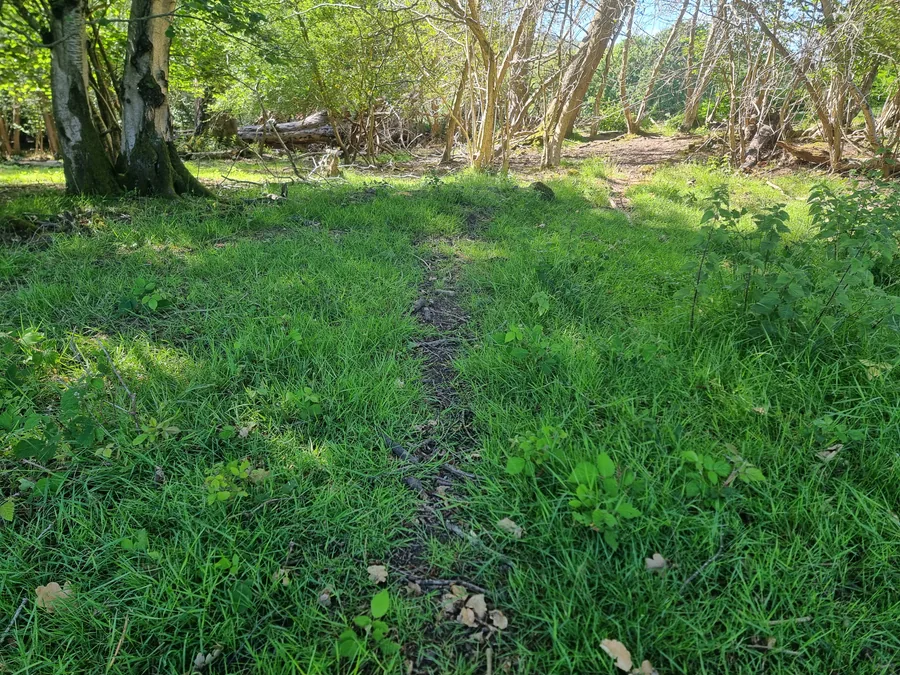
How Deer Impact Assessments Help Woodland Owners
For woodland owners, the most common concern is whether deer browsing is preventing natural regeneration or restricting the establishment of a planting scheme. A Deer Impact Assessment provides the evidence needed to answer that question clearly.
Where regeneration is failing, the assessment can help determine whether deer are the primary cause or one of several contributing factors. This distinction matters because the appropriate response to a deer browsing problem is different from the response to poor soil conditions, weed competition or inadequate aftercare, and without a proper assessment, effort and resources can easily be directed in the wrong direction.
Where deer are identified as the key constraint, the findings provide the evidential basis for decisions about fencing, tree protection, targeted deer management or wider population management. Where the assessment shows that conditions are currently acceptable, it provides useful reassurance and a baseline against which future change can be measured.
Regular assessments over successive seasons can detect trends that a single visit would miss, building a cumulative picture of whether woodland condition is improving, stable or deteriorating in response to current management. This monitoring function is one of the reasons Deer Impact Assessments are an important component within a structured Deer Management Plan.
How Deer Impact Assessments Help Farmers
For farmers and landowners with agricultural land, a Deer Impact Assessment can identify the nature, location and scale of crop damage and help establish where deer are entering fields, how they are moving across the farm and when pressure is highest.
This information is directly useful for management decisions. Understanding that damage is concentrated in one part of the farm, along a particular hedgerow, or heaviest at specific times of year, points towards where fencing or management effort is most likely to be effective. Without this information, management tends to be reactive and dispersed, responding to visible damage rather than addressing the underlying pattern.
A site assessment can also help confirm which deer species are responsible, since different species cause different types of damage and may respond differently to management. Signs of excessive deer pressure on agricultural land can sometimes be subtle, particularly where damage is spread across a wide area rather than concentrated in one visible location.
What Happens After a Deer Impact Assessment?
The findings of a Deer Impact Assessment determine what, if anything, needs to happen next. The range of possible responses is wide, and the appropriate course of action will depend on the severity of the impacts identified, the land management objectives in place and the wider circumstances of the site.
Where impacts are limited and land management objectives are being met, continued monitoring may be the most appropriate response. Periodic repeat assessments provide ongoing reassurance and can detect early signs of change before they develop into a more significant problem.
Where impacts are more significant, the assessment findings can inform a range of practical responses:
- Installation of exclosures to compare browsed and unbrowsed vegetation
- Tree guards or protection measures for vulnerable young trees or planting schemes
- Deer fencing around high-priority regeneration or conservation areas (a landowner decision; not installed by UK Deer Management)
- Preparation of a full Deer Management Plan with defined objectives and review procedures
- Targeted deer control where population pressure is identified as a primary cause
- Collaboration with neighbouring landowners where deer are moving across boundaries
The objective is always to develop a response that is proportionate to the evidence, realistic in the context of the site and aligned with what the landowner is trying to achieve. An assessment based on what is actually happening on the ground provides a far more reliable foundation for those decisions than estimates or assumptions about deer numbers alone.